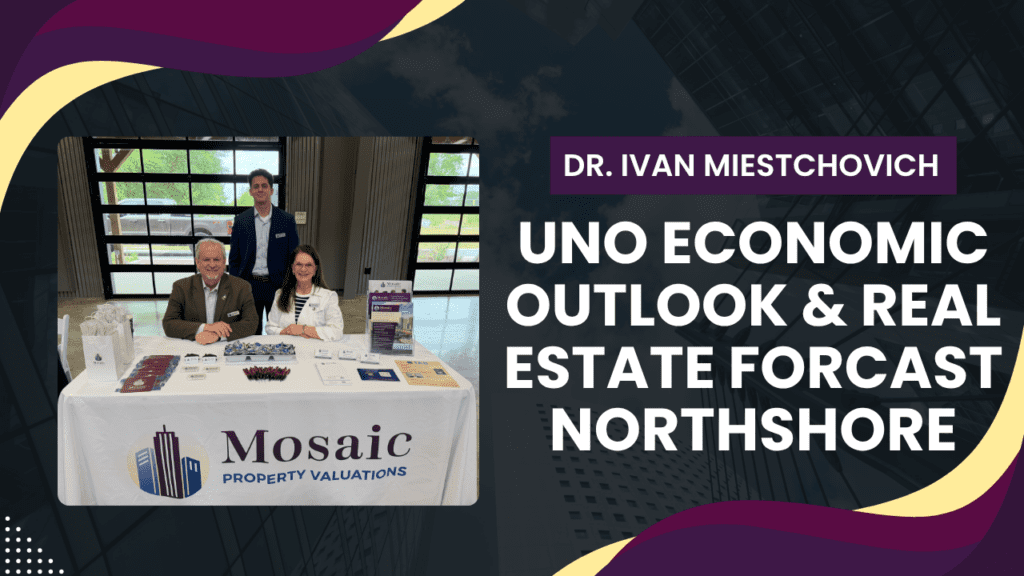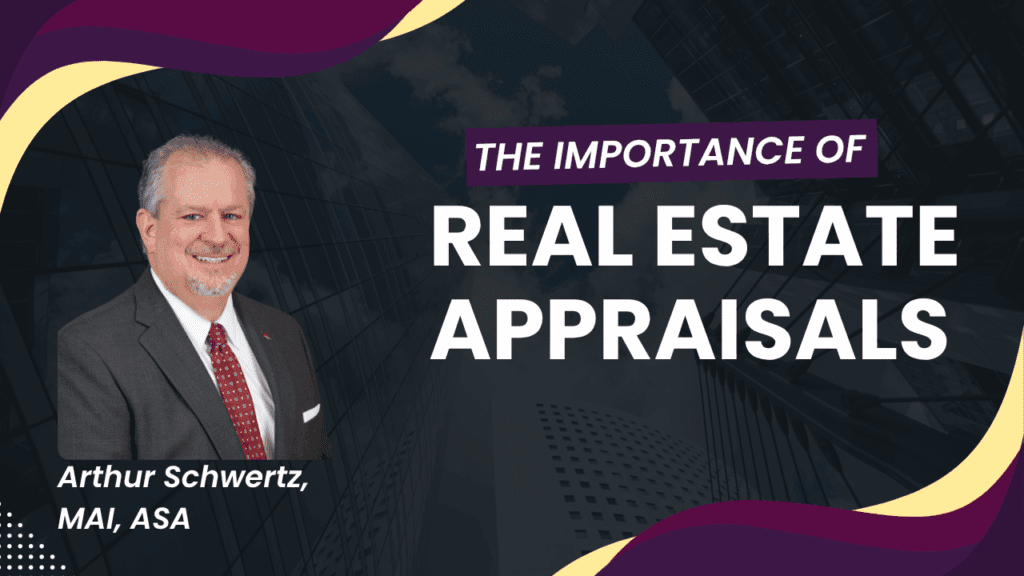
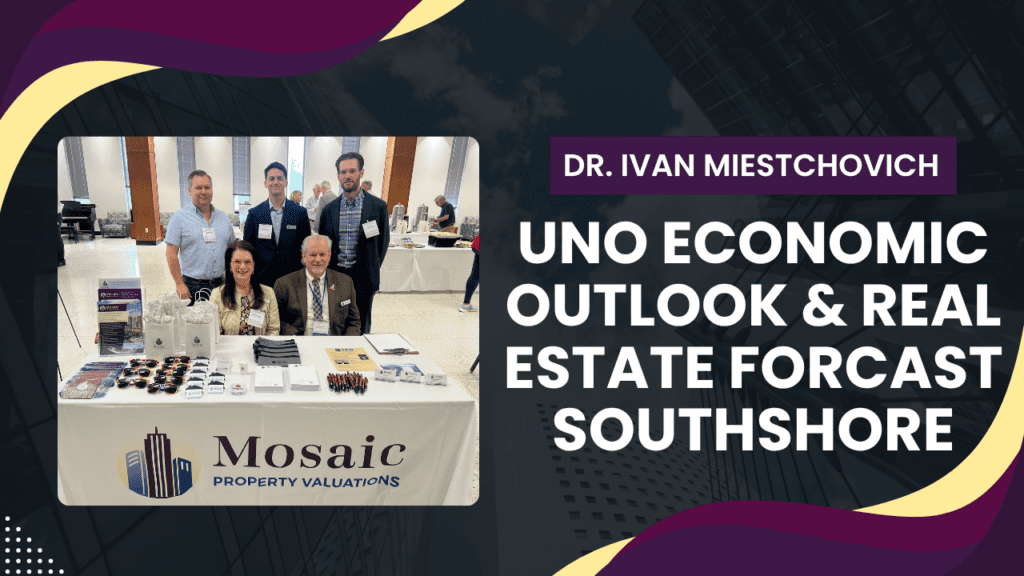
The Dr. Ivan Miestchovich Economic Outlook & Real Estate Forecast was an excellent event that provided valuable insight into the current and future state of the New Orleans real estate market.
Many industry panels across the state often focus heavily on the challenges facing Louisiana and tend to carry a more pessimistic tone. What stood out about this event, however, was the balanced perspective presented throughout the discussions. While the speakers openly acknowledged the very real obstacles facing the region, they also emphasized the opportunities Louisiana has positioned itself to capture in recent years. The overall tone reflected cautious optimism grounded in realistic expectations. Several major themes emerged throughout the event, including economic momentum, renewable energy investment, commercial development, and infrastructure growth.
Regional and Economic Development
This panel featured several leaders in regional economic development including Grady Fitz Patrick, Patrick Beard, Jerry Bologna, and Meaghan McCormack. The discussion focused heavily on the recent momentum Louisiana has experienced in attracting major industrial and economic development projects. According to the panelists, Louisiana has secured two of the largest economic development projects in the country over the past two years, signaling growing confidence from investors and companies looking to expand within the state.
One of the key industries discussed was shipbuilding, which continues to serve as a major economic driver for the New Orleans region. However, the industry is also evolving alongside advances in automation and autonomous technologies. This shift is creating new opportunities for innovation and workforce development while reinforcing Louisiana’s long-standing role within the manufacturing and maritime sectors.
Another major point of discussion centered around the NASA Michoud Assembly Facility and its role in the upcoming Artemis II mission. The Michoud facility is responsible for a significant portion of the manufacturing tied to the Artemis II rocket, which will mark the first crewed mission to travel around the moon since 1972. The project represents not only a historic milestone for the nation, but also highlights the importance of New Orleans within the aerospace and advanced manufacturing industries.
Beyond traditional manufacturing, panelists also discussed the increasing number of technology and energy-focused companies investing in the region. One example is Newlabs, which is currently being developed at the former Navy base in the Bywater area. The project is focused on supporting and scaling deep technology startups, particularly companies involved in carbon management, clean hydrogen, and other emerging energy technologies. Developments such as this could help position New Orleans as a growing hub for innovation and sustainability-focused investment.
One of the more important themes throughout the discussion was the growing collaboration between parishes across Southeast Louisiana. Rather than competing directly against one another, many local leaders now recognize that large-scale projects often benefit the entire region through job creation, infrastructure improvements, and increased economic activity. For example, Southern Energy Renewables recently announced a major methanol and sustainable aviation fuel facility in St. Charles Parish, while St. Bernard Parish continues working toward the development of the Louisiana International Terminal. Although these projects may physically exist within a single parish, neighboring areas often benefit from increased employment opportunities, housing demand, and additional tax revenue.
Overall, the panel reflected a strong sense of long-term optimism surrounding Louisiana’s economic future. Continued investment in renewable energy, infrastructure, advanced manufacturing, and technology-driven industries appears to be positioning the state for more sustainable long-term growth rather than short-term economic gains.
Residential Real Estate Challenges & Opportunities
This panel featured Dan Mills, Larry Kornman, Rick Roberts, and Larry Schedler. While my primary focus is not residential properties, the discussion reinforced how closely housing development impacts overall commercial growth and economic stability. Housing remains one of the most important drivers of economic development. Without adequate housing supply, companies face challenges expanding operations, relocating employees, or establishing headquarters within the region.
One of the major concerns discussed throughout the panel was the lengthy development process and regulatory hurdles tied to residential construction. In many cases, multifamily developments can take nearly two years just to reach the point of breaking ground. These delays create uncertainty for developers and can push larger projects toward other markets both inside and outside Louisiana where timelines may be more predictable.
Affordability also continues to be a major issue throughout the New Orleans area. Rising insurance costs, elevated construction expenses, and higher interest rates have created significant barriers for both developers and homebuyers. Much of New Orleans’ housing inventory is older, and with limited available land remaining, new development often requires demolition and redevelopment of existing structures. When factoring in demolition costs alongside already elevated construction pricing, many projects become financially difficult to justify. Panelists noted that affordable housing development is especially challenging under current market conditions, with some stating that projects would likely require properties to trade well below historical market values in order to become financially feasible.
At the same time, the market has started shifting toward more balanced conditions compared to the rapid pace seen during the post-COVID housing surge. Sellers are gradually adjusting pricing expectations while buyers are becoming more cautious and selective. Insurance continues to play a major role in this shift, particularly in coastal markets like New Orleans. Even when buyers initially qualify for a mortgage, insurance premiums can significantly increase monthly housing costs and impact affordability beyond what many households can realistically manage.
The panel also discussed opportunities tied to redevelopment and land availability. The City of New Orleans currently owns residential lots that could potentially be returned to the market for future housing development. Expanding access to these properties could help increase housing supply, especially if supported by continued job growth throughout the region. In areas such as New Orleans East, addressing blight remains a critical priority. Redevelopment and cleanup efforts could improve quality of life, attract additional investment, and support broader economic activity across both residential and commercial sectors.
Ultimately, one of the strongest takeaways from the discussion was that affordability remains one of the most important long-term challenges facing the New Orleans housing market. Addressing these issues will likely require a combination of regulatory improvements, redevelopment efforts, infrastructure investment, and stronger coordination between both the public and private sectors.
Commercial Real Estate Market Trends
The Commercial Real Estate Panel provided insight into how office, industrial, and multifamily markets across Southeast Louisiana are continuing to evolve in response to changing tenant expectations, rising operating costs, and broader economic trends. Panelists included Arthur Schwertz, Bryce French, Scott Graf, and Paul Richard.
One of the more notable trends discussed was that while the overall number of office deals has slowed, the quality and length of leases have improved. Many tenants are now committing to longer lease terms ranging from 10 to 15 years and investing significantly more into their office environments. Higher quality collaborative office spaces that previously cost $40 to $50 per square foot to construct are now costing approximately $90 to $100 per square foot in some cases. These upgraded spaces are increasingly viewed as tools for employee retention and workplace culture rather than simply places to conduct business.
At the same time, operating expenses continue to put pressure on rental rates. Panelists noted that on a lease rate of approximately $25 per square foot, operating expenses alone can account for nearly half of the total cost. Rising insurance, maintenance, and utility expenses are forcing landlords and tenants alike to carefully evaluate long-term occupancy costs.
Another trend discussed throughout the panel was the growing demand for boutique office space and amenity-driven properties. Several Class A office buildings in New Orleans have recently changed ownership, often leading to renovations and repositioning efforts. Rather than relying solely on traditional office income, many buildings are using ground-floor retail and amenities such as coffee shops, restaurants, and fitness centers to create more active and collaborative environments for tenants.
The industrial market continues to remain extremely tight, with vacancy rates below 3 percent. Companies entering the market are increasingly seeking higher quality warehouse space with modern features including larger eave heights, improved column spacing, and upgraded logistics capabilities. The anticipated impact of the Louisiana International Terminal was also a major point of discussion, as increased container traffic is expected to create additional demand for industrial and warehouse properties throughout the region.
In the multifamily sector, affordability and walkability continue to shape tenant demand. Panelists referenced the growing “missing middle” housing segment, referring to residents who earn too much to qualify for subsidized housing but not enough to comfortably afford market-rate apartments. In response, some investors are converting older single-family homes into smaller multifamily properties with four to six units in an effort to provide additional housing options within established neighborhoods.
One of the strongest themes throughout the discussion was the continued “flight to quality.” Across office and industrial markets, tenants appear increasingly willing to pay higher rates for properties that offer better amenities, modern layouts, and long-term functionality.
Real Estate Financing and Insurance
The Real Estate Financing and Insurance Panel focused heavily on how insurance volatility, financing conditions, and economic uncertainty continue to impact both residential and commercial real estate markets throughout Louisiana. Speakers included Dr. Ali Bustamante, Holly Callia, Barrett Blaum, and Marcus Eagan.
Insurance was consistently identified as one of the largest barriers impacting market activity. Both commercial and residential property owners continue to face elevated premiums, which have affected affordability, financing, and investment decisions across the region. While panelists expressed optimism that additional insurance carriers may eventually return to Louisiana following several stable storm seasons, the market remains cautious.
The panel also discussed how commercial insurance markets typically react faster than personal insurance markets, with more carriers beginning to enter the commercial space and some premiums starting to stabilize. Risk mitigation measures such as fortified roofs and updated building codes were highlighted as important tools that can help property owners lower insurance costs while also making properties more attractive to underwriters.
Financing trends also reflected the changing market environment. While 2026 has reportedly started on stronger footing with mortgage applications becoming somewhat easier to obtain, affordability challenges remain significant. First-time homebuyers currently represent only around 21 percent of home purchases, and the profile of the typical first-time buyer has shifted considerably. According to panelists, many first-time buyers are now closer to 40 years old, often with dual incomes and stronger retirement savings before entering the housing market.
The panel also touched on the long-term impact of artificial intelligence and changing workplace dynamics on office demand. Office properties are still adjusting to post-COVID work patterns, and there remains uncertainty surrounding how AI could potentially reduce workforce size and future office space requirements. While the long-term effects are still unknown, panelists agreed that technology will likely continue reshaping how companies use commercial real estate.
A major takeaway from this discussion was how interconnected insurance, financing, and development have become throughout Louisiana. Whether discussing residential housing, commercial investment, or industrial expansion, insurance costs and lending conditions continue to influence nearly every segment of the real estate market.
Conclusion
Across each panel discussion, a common theme emerged that Louisiana is navigating a period of both opportunity and transition. From major economic development projects and renewable energy investment to shifting office trends and housing affordability concerns, the region continues adapting to changing market conditions while positioning itself for long-term growth.
The conversations highlighted several encouraging trends, including increased regional collaboration between parishes, large-scale infrastructure investment, expanding industrial demand, and continued interest from companies relocating or expanding into Louisiana. At the same time, challenges surrounding insurance costs, housing affordability, construction timelines, and redevelopment constraints remain significant obstacles for both businesses and consumers.
One of the more valuable aspects of the discussions was the balance between optimism and realism. Many of the panelists acknowledged that while Louisiana is attracting substantial investment and development opportunities, sustained growth will require cooperation between public agencies, developers, lenders, insurers, and local communities.
As Southeast Louisiana continues to evolve, the region’s ability to improve infrastructure, expand housing opportunities, modernize commercial properties, and maintain economic momentum will likely play a major role in shaping the market over the next decade.